Resources
What Actually Gets Cleaned During Commercial Kitchen Exhaust Cleaning?
A kitchen exhaust cleaning is the grease path you can reach: hood, filters, plenum, duct, fan, and rooftop. Fire-suppression equipment is a different trade.
· · Wilke Service Co.
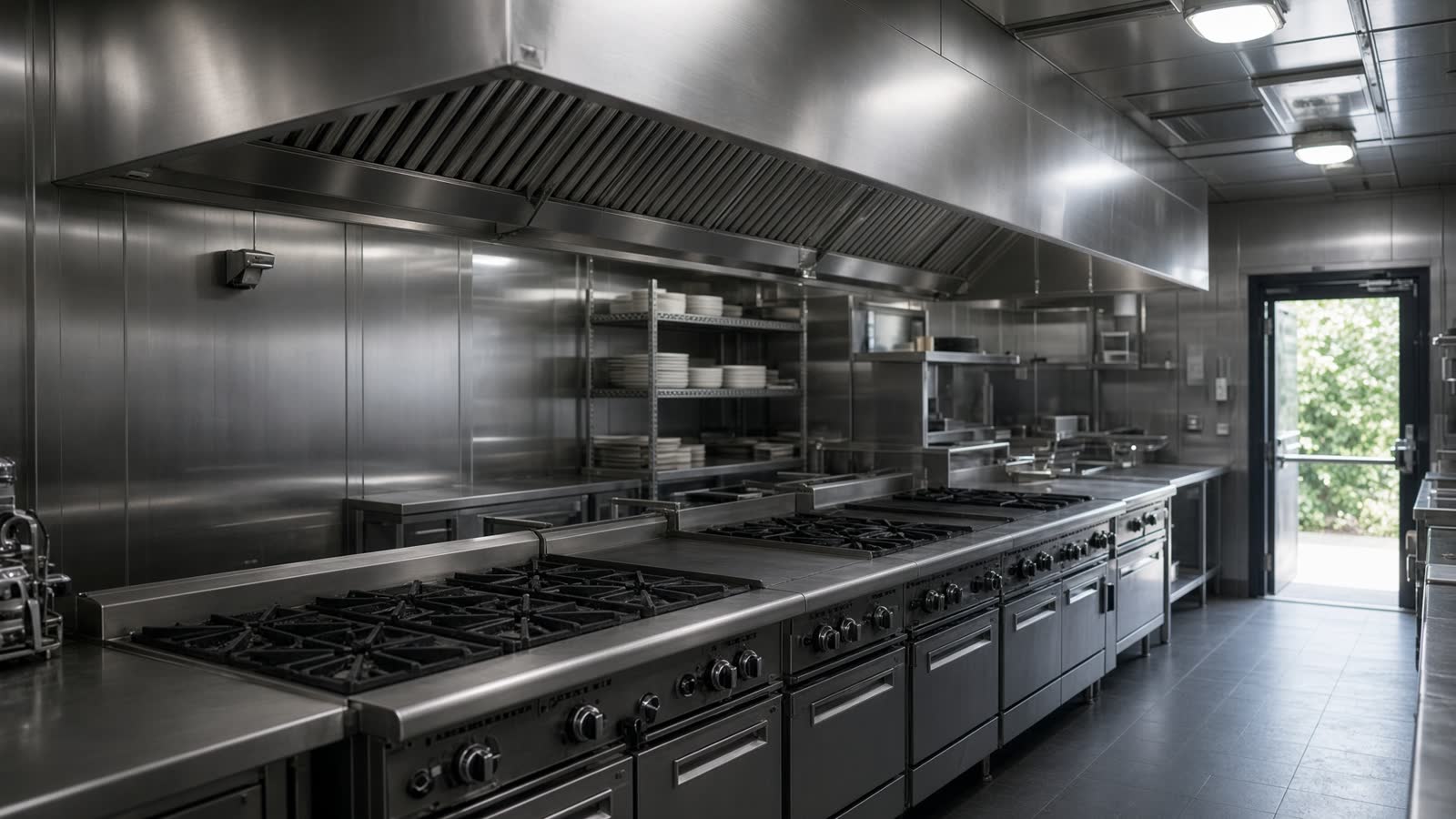
A commercial kitchen exhaust cleaning is not a wipe of the stainless you can see from the cookline. It is the grease path that carries cooking vapor out of the building — and only the parts of that path someone can actually reach.
This page is general guidance for restaurant operators. What Wilke Service Co. quotes as kitchen exhaust cleaning is the accessible hood-to-fan path plus rooftop grease. Wilke Service Co. does not inspect or service fire-suppression systems. That work stays with a qualified fire-protection contractor. How often your system must be cleaned varies with the type and volume of cooking, grease accumulation, locally adopted requirements and the authority having jurisdiction, and insurer or facility requirements — not by this article.
The path that gets cleaned
Industry standards treat the exhaust system as the equipment that captures grease-laden vapor and moves it outdoors. In practice, a thorough cleaning follows that same line:
- Hood canopy — the underside and interior surfaces over the cooking equipment.
- Grease-removal devices — baffle filters and similar inserts, pulled, cleaned, and put back.
- Plenum — the collection box above the filters, before the duct.
- Duct — horizontal and vertical runs that can be opened and reached.
- Exhaust fan — blades, housing, and the fan base when they can be accessed.
- Rooftop grease — curb, containment, and the grease that walked out of the fan.
That list matches the work on our kitchen exhaust service hub. If a section cannot be opened, it is not cleaned. Calling it cleaned anyway is how grease gets left in the dark.
What this service is not
The National Fire Protection Association’s overview of restaurant fire protection is clear that cooking equipment producing grease-laden vapors needs both ventilation and a listed fire-extinguishing system. Those are neighboring systems. They are not the same job.
- Fusible links, tanks, nozzles, and other fire-protection devices — not included.
- Electrical work on the fan circuit — not included.
- Roofing repair or curb replacement — not included.
- A fire-marshal inspection or a “passed NFPA” stamp from Wilke — not offered. We document the cleaning we did.
Optional add-ons that are exhaust-path work — hinge kits, safety cables, grease-containment pads, filter exchange — sit on the hinge kits and grease containment page. They are quoted as their own lines.
How often is “enough”?
There is not one universal cleaning interval. Frequency varies with the type and volume of cooking, how much grease has accumulated, locally adopted requirements and the authority having jurisdiction, and what an insurer or facility requires. Fire-extinguishing systems have their own maintenance cycle, separate from exhaust cleaning.
We will quote a one-time visit or a recurring calendar if you want one. We will not invent a required interval for your kitchen, and we will not tell an insurer what they must accept. If the fan will not open, that belongs in the notes — see when an exhaust fan needs a hinge kit.
Use the standard that applies to the kitchen
An inspection schedule is a prompt to assess the system; it is not a promise that every kitchen can wait the same number of months for cleaning. Record the basis for the next inspection and the action to take when deposits or access problems are found.
NFPA 96 covers commercial cooking ventilation and fire protection. Confirm whether it is adopted or required for the property and which edition applies. For a UK reference, BESA distinguishes TR19 Grease for kitchen extraction systems from TR19 Air for ventilation hygiene. These references help identify the right questions; neither makes Wilke certified or determines compliance at an individual site.
What you get after cleaning
Expect service notes and photos of the sections that were reached. If the fan would not open or a duct run stayed closed, that belongs in the notes - not in a sticker that implies the whole path was done. This is documentation of the cleaning performed. It is not a fire-marshal inspection, not fire-suppression certification, and not an NFPA compliance stamp from Wilke.
Access problems are often a hinge-kit question. Quote those as their own line when the next cleaning needs the fan to tilt.
Keep a record by system section
Use the same section names in the scope, photographs and completion notes. This makes omissions easier for the operator and the next contractor to understand.
- Identify each hood, filter bank, plenum, duct run, fan and grease collector in scope.
- Record which sections were actually reached, with corresponding before-and-after photos.
- List inaccessible sections and the reason; keep them open rather than marking the whole path complete.
- Assign access, electrical, roofing or fire-system concerns to the appropriate trade.
- Keep the date, contractor details, agreed scope and next inspection basis together.
Need an evidence-first record to hand the restaurant manager? Our free kitchen exhaust cleaning documentation checklist separates existing photos, sections not confirmed, and questions for the proper specialist. It is not a fire-system certificate.
Related work & service information
These guides are available worldwide. On-site work depends on your location and confirmed availability. Check service areas.
Sources
Source links and scope checked November 10, 2026. A reference to a standard does not establish which edition applies locally. Manufacturer documents apply to the products they identify.
- NFPA — Restaurant Fire Protection BasicsU.S. standards publisher overview. Exhaust cleaning and fire-extinguishing-system service are distinct; this reference is not a Wilke certification.
- NFPA 96 — publisher informationCommercial cooking ventilation and fire-protection standard. The applicable edition and legal or contractual status must be established for the property; publication does not establish local adoption.
- ANSI/IKECA standardsU.S. industry standards for kitchen-exhaust cleaning and related work. Wilke does not claim IKECA membership or certification.
- BESA — TR19 Air and GreaseUnited Kingdom industry guidance. TR19 Grease addresses grease accumulation in kitchen extraction; TR19 Air addresses broader ventilation hygiene. Public overview reviewed; the paid specifications are not reproduced.
FAQ
Questions this page answers
Does exhaust cleaning include the fire-suppression system?
No. Wilke Service Co. does not inspect or service fire-suppression systems. That work stays with a qualified fire-protection contractor. Exhaust cleaning is the grease path: hood, filters, plenum, accessible duct, fan, and rooftop grease that can be reached.
How often does a kitchen exhaust system need to be cleaned?
There is not one universal interval. Frequency varies with the type and volume of cooking, grease accumulation, locally adopted requirements and the authority having jurisdiction, and insurer or facility requirements. Ask the responsible contractor to document the basis for the inspection and cleaning schedule. Wilke visits depend on confirmed local coverage.
What if part of the duct or fan cannot be reached?
Then that section is not honestly “cleaned.” Hinge kits, safety cables, and other appropriate non-fire-system access hardware can be quoted as a separate add-on so the next cleaning can get there. Access panels are an example of access that may be required; duct access-panel installation is not a confirmed Wilke service.
What documentation do we get after exhaust cleaning?
Service notes and photos of the sections that were reached. Unreachable sections belong in the notes. That is documentation of the cleaning performed - not a fire-marshal inspection, fire-suppression certificate, or NFPA compliance stamp from Wilke.
Planning work at your property?
Use the guide to prepare a clear brief for a qualified local contractor. For help from Wilke, check the current service areas first. Availability and scope must be confirmed for your location.
Check service availability