Resources
Kitchen Exhaust Cleaning Documentation Checklist & Free Handoff
Compare the service report to the hood-to-fan path, record what is actually documented, and flag missing access or follow-up. Free private text worksheet.
· Wilke Service Co.
A clean-looking hood does not tell a restaurant operator whether the fan wheel, duct entrance, plenum, or rooftop grease area was addressed. This guide helps compare a service report with the evidence behind it instead of asking a manager to guess what was reachable.
It is an original, owner-facing documentation worksheet — not a substitute for an exhaust-system inspection. Use existing contractor notes and photographs only. Never go on a roof, reach into ductwork, or operate a fan to complete the form. The free tool below does not transmit or save your entries.
First, separate three different jobs
- Cleaning methodology: what sections were accessed and how the service was documented. The official ANSI/IKECA C10 summary concerns cleaning methods and post-cleaning cleanliness.
- Inspection: the condition of a system, its components, access and hazards. The official ANSI/IKECA I10 summary describes inspection methodology, not a certificate the owner can self-issue.
- Interim maintenance: what the operator manages between professional service visits. ANSI/IKECA M10 addresses this distinct owner/operator role.
- Fire suppression: tanks, nozzles, fusible links and related devices are a different qualified trade, not included in Wilke exhaust cleaning.
NFPA 96 covers commercial cooking ventilation and fire protection. Applicable editions and requirements depend on locally adopted rules, the authority having jurisdiction, the system, and other facility obligations. This free worksheet does not quote or reproduce any paid code language, choose a legally required interval, or claim NFPA/IKECA certification.
What to compare in a cleaning report
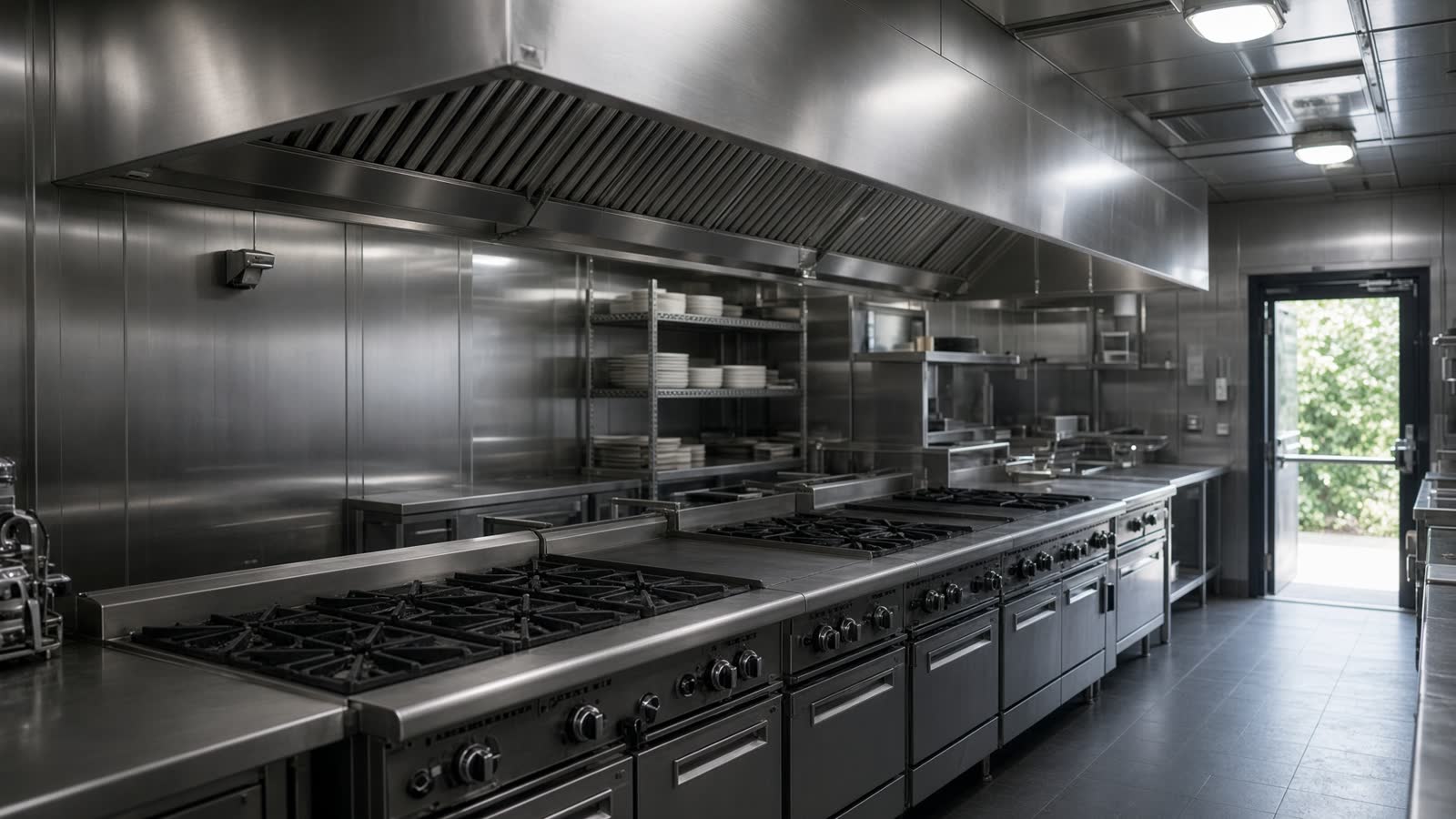
The path behind the visible stainless
Start with the hood, grease-removal devices and plenum. Then look for specific notes about reachable horizontal or vertical duct, the fan wheel and housing, and rooftop grease. These are documentation questions, not instructions to perform inspection or cleaning yourself. The companion guide, what actually gets cleaned, explains each component.
The difference between "not seen" and "done"
A rooftop photo shows a rooftop. It does not prove the fan interior was opened. Likewise, a completed hood photograph cannot establish the condition of a concealed duct run. A useful handoff states which portions were reported complete, which areas were not accessed, and who owns each follow-up. An unknown is not a failure — hiding it is what makes a record difficult to use.
When access hardware deserves its own line
Fan access may involve hinges and hold-open hardware. Manufacturer guidance from Greenheck explains that hinge kits can provide access to the fan wheel and ductwork for cleaning. That does not mean every fan requires the same kit or that installation itself certifies compliance. See our fan hinge-kit decision guide and quote any appropriate non-fire-system hardware separately.
A practical handoff to ask for
- A service date and an unambiguous system reference, without customer-identifying data in this public tool.
- Photographs or notes identified by the section shown — not one unlabeled photo album.
- A clear description of sections reached, sections not opened, and any access constraint.
- Separate, named follow-ups for cleaning, hinges or grease containment, roof repair, electrical work and fire-suppression work.
- A responsible receiving manager and a date or condition for rechecking unresolved issues.
Download the blank text template if you prefer paper or a text editor. The interactive version below lets you mark seven reporting areas without sharing notes to this website.
Where this guide applies
The documentation method is useful for commercial kitchens anywhere; legal requirements and service availability are local. Wilke Service Co.'s quoted exhaust-cleaning scope is regional and does not include fire-suppression or electrical inspection. Outside that coverage, ask a qualified local provider and the appropriate authority.
How this page was prepared: Wilke Service Co. assembled an original manager-facing handoff from the public official standards summaries and manufacturer information linked below, checked November 14, 2026. It is not a professionally endorsed standard, a substitute for the full paid code, or a report of a particular customer job.
Free field notes · Works on this device
Build a clearer handoff, without guessing.
Compare the notes and photos you already have. Mark missing evidence as unconfirmed—not a completed inspection. Make a text record for the responsible operator or property manager.
0 of 7 topics marked with evidence or follow-up
Safety before paperwork
Use existing service notes and safely supplied photos. Do not climb onto roofs, open operating fans or ducts, or handle energized equipment to complete a worksheet.
Do not enter credentials, tenant information, customer names, or private records. The worksheet does not submit or save data. Copying and downloading happen only when you choose them.
A label to help you recognize the record. Leave it blank if it could identify an occupant or customer.
Hood and visible interior
Can the service report identify the accessible hood areas treated?
Ask next: Ask for a clearly identified hood-view photo or an access limitation.
Grease-removal devices
Does the report distinguish filter condition or cleaning from the rest of the path?
Ask next: Request filter documentation; do not assume every insert was serviced.
Plenum
Is the plenum specifically identified in the service description?
Ask next: Ask whether it was reachable and, if not, what prevented access.
Accessible duct runs
Are accessible sections and any unopened sections described separately?
Ask next: Have the contractor identify omitted or inaccessible sections in writing.
Fan wheel, housing and safe access
Is the fan section documented without confusing a rooftop view with internal access?
Ask next: Refer inaccessible or defective fan access to an appropriately qualified provider.
Rooftop grease and containment
Are roof-level grease observations and containment notes included?
Ask next: Ask what was seen and what requires a separate containment or roofing trade.
Photos, exceptions and receiving owner
Are service date, photo context, unfinished items and follow-up owner distinguishable?
Ask next: Reconcile the handoff with the operator and responsible qualified trades.
Related work & service information
These guides are available worldwide. On-site work depends on your location and confirmed availability. Check service areas.
Sources
Source links and scope checked November 14, 2026. A reference to a standard does not establish which edition applies locally. Manufacturer documents apply to the products they identify.
- IKECA — ANSI/IKECA C10-2021, I10-2025 and M10-2023 summariesOfficial standards-body summaries distinguish cleaning methodology, inspection and interim maintenance. Full standards are not reproduced; this worksheet does not assert conformity.
- NFPA — NFPA 96, commercial cooking ventilation and fire protectionOfficial standard listing, including ventilation, grease removal, fans and fire suppression. Editions and enforcement vary locally; this site provides no NFPA certification.
- Greenheck — manufacturer hinge-kit documentationManufacturer states hinge kits provide access to the fan wheel and ductwork for cleaning/inspection. It is product information, not proof a particular fan needs a kit.
FAQ
Questions this page answers
Does a completed handoff prove the system was cleaned?
No. This worksheet records what an operator has been shown and what remains unknown. A contractor's actual scope, access, service records and any required inspections must be verified separately.
Is this an NFPA or IKECA inspection checklist?
No. It is an owner-facing documentation aid informed by public standards summaries, not a reproduction of a paid standard or a compliance certificate. The locally adopted code, authority having jurisdiction, qualified inspectors and facility requirements control.
Why include a fan and duct when the hood looks clean?
The accessible exhaust path includes more than visible stainless. A hood photograph does not document the fan wheel or an unopened duct. Ask which portions were accessed and which were not.
Can I use the checklist without sending information to Wilke?
Yes. The worksheet remains in the current browser page; it prepares text to copy or save only after your action. Do not enter private customer, employee or credential information.
Planning work at your property?
Use the guide to prepare a clear brief for a qualified local contractor. For help from Wilke, check the current service areas first. Availability and scope must be confirmed for your location.
Check service availability